How to Relax Your Body Before Bed: 7 Simple Evening Habits
Your body does not switch off the moment your head touches the pillow. After a long day, your muscles can stay a little tense, your mind keeps running, and the room may be too bright or too warm for sleep to come easily. What helps most is giving your body a gentle runway into the night.
The good news is that the habits that help are simple. The NHS advises relaxing for at least an hour before bed, and most of the steps below take only a few minutes. You do not need all seven: start with one or two.

1. Keep the same bedtime and wake-up time
Your body runs on an internal clock, and that clock likes routine. Going to bed and getting up at roughly the same time every day, weekends included, helps it learn when to start winding down. The NHS advises getting up at the same time every day, and sticking to your usual hours even after a bad night rather than sleeping in.
Pick a wake-up time you can keep, then count back seven to nine hours, which is how much sleep the NHS says most adults need. That is your target bedtime.

2. Dim the lights and put screens away
Bright light tells your brain it is still daytime. In a well-known sleep-lab study at Brigham and Women's Hospital in Boston, people who read on a light-emitting tablet before bed took longer to fall asleep and released less melatonin, the hormone that signals night-time to your body, than when they read a printed book.
About an hour before bed, switch to softer lamps, put your phone face down or on charge outside the bedroom, and pick up a paper book instead. The NHS gives the same advice: avoid smartphones and other devices right before bed, because the blue light makes you more awake.

3. Take a warm bath or shower 1 to 2 hours before bed
A warm bath does more than feel nice. A 2019 review of 17 studies found that a warm bath or shower of around 40 to 42.5°C, taken one to two hours before bed, was linked to falling asleep faster and to better-rated sleep, even when it lasted just 10 minutes. The researchers think it works by sending blood to your hands and feet, which helps your body shed heat afterwards. That gentle drop in core temperature is one of the body's natural cues for sleep.
Keep the water comfortably warm rather than hot. No time for a bath? A warm shower counts too.

4. Move during the day, keep the evening gentle
Regular exercise is on the NHS list of habits that help with sleep. Timing matters, though. The NHS suggests not exercising in the four hours before bed, and a 2019 review of 23 studies found that evening exercise generally did not harm sleep, but that hard exercise ending within an hour of bedtime might.
So keep brisk walks, gym sessions and heavy gardening for earlier in the day. In the evening, keep it soft: an unhurried stroll after your evening meal, or a few slow stretches for your back, hips and shoulders.

5. Slow your breathing
Breathing is one of the few things your body does on autopilot that you can also slow down on purpose. A 2018 review of 15 studies in healthy adults found that slow breathing, under 10 breaths a minute, was linked to more activity in the body's 'rest and digest' system, and to people feeling more relaxed and comfortable and less anxious.
Try this in bed or sitting by a window: breathe in gently through your nose for a count of four, then breathe out slowly for a count of six. Keep going for three to five minutes. That works out at about six breaths a minute.

6. Keep your bedroom cool, dark and quiet
Noise, an uncomfortable bed and a room that is too hot or too cold are all on the NHS list of common causes of poor sleep. Its advice is simple: make sure your bedroom is dark and quiet, using curtains, blinds, an eye mask or earplugs if you need them, and make sure your mattress, pillows and covers are comfortable.
Before bed, open a window for a few minutes or turn the heating down a little, so the room feels cool rather than stuffy.

7. Anchor it all with a nightly ritual
The habits above only help if you keep them up, and the easiest way to keep a habit is to tie it to a small ritual you do at the same time every night. It gives your evening a clear end point: the moment the day is done.
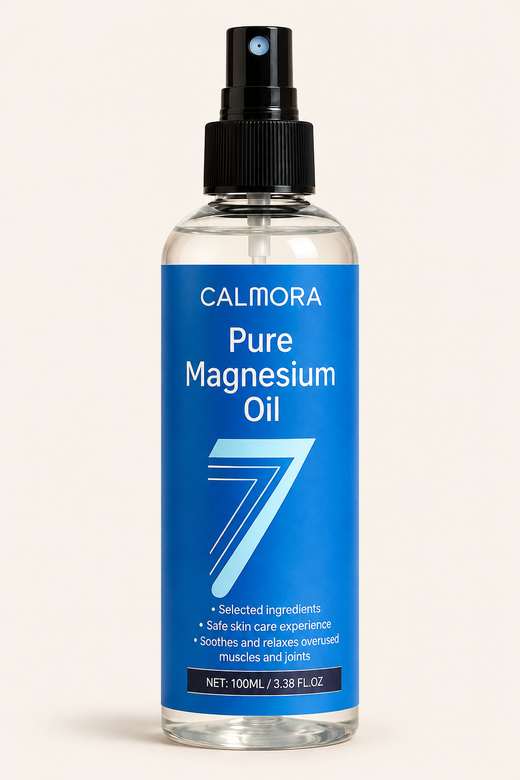
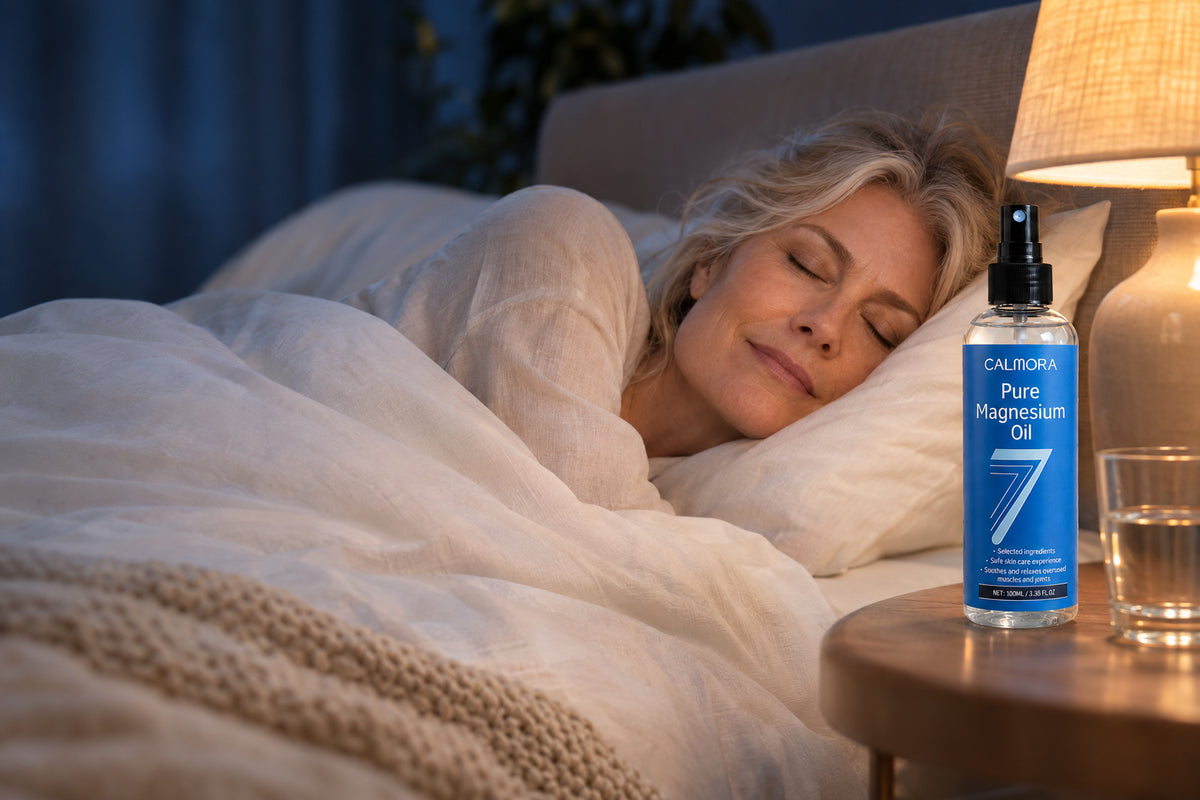
This is the thinking behind Calmora Pure Magnesium Spray: a bedtime ritual rather than another tablet to swallow. About 30 minutes before bed, spray 4 to 8 sprays onto your legs, back or shoulders (8 to 12 for bigger areas), then massage it in for 30 to 60 seconds. Those slow minutes of self-massage are part of the wind-down in their own right.
Frequently asked questions
How long before bed should I start winding down?
The NHS suggests relaxing for at least an hour before bed, for example by taking a bath or reading a book. Start with one or two of the habits above, and add more once they feel natural.
Does a warm bath before bed really help?
The research is promising, though still limited. A 2019 review linked a warm bath or shower of around 40 to 42.5°C, one to two hours before bed, with falling asleep faster and better-rated sleep. Keep the water comfortably warm, not hot.
Is it bad to use my phone in bed?
The NHS advises against using devices like smartphones right before bed, because the blue light makes you more awake. If your phone is your alarm, set it early, turn it face down and leave it out of reach.
Can a magnesium spray replace these habits?
No, and it is not meant to. Calmora is designed to be part of a calm bedtime routine: a few sprays and a slow massage that give your evening a clear end point. If sleep problems last for months or make daily life hard, the NHS advises speaking to a GP.
Sources
- NHS. Insomnia (page last reviewed 19 March 2024).
- Chang AM et al. Evening use of light-emitting eReaders negatively affects sleep, circadian timing, and next-morning alertness. PNAS, 2015.
- Haghayegh S et al. Before-bedtime passive body heating by warm shower or bath to improve sleep: a systematic review and meta-analysis. Sleep Medicine Reviews, 2019.
- Stutz J et al. Effects of evening exercise on sleep in healthy participants: a systematic review and meta-analysis. Sports Medicine, 2019.
- Zaccaro A et al. How breath-control can change your life: a systematic review on psycho-physiological correlates of slow breathing. Frontiers in Human Neuroscience, 2018.
Related reading

Calmer evenings: anchor your seven habits with one simple ritual
You do not need to do all seven at once. Pick one or two, build them into your evening, then add the next. If you would like one small ritual to tie them together, Calmora Pure Magnesium Spray takes about a minute before bed and comes with a 90-day money-back guarantee, so you can try it at your own pace.
This article is for general information only and is not medical advice. If sleep problems last for months or affect your daily life, speak to your GP.